A couple videos Eva's friend Gwen (riding Brandy) took of her and Atticus jumping the coop and log in the park. It was a beautiful day for it!

Monday, April 19, 2021
Friday, April 16, 2021
Wednesday, April 14, 2021
Horses begging for treats
Cute horse butts! Atticus is far right, and his two sons, Pimms and Wookie, are next to him. All mugging Eva for treats, I believe!
Posted by Orchard Creek Farm LLC on Tuesday, April 6, 2021

Happy Horses Grazing
Atticus, Pimms, Brandy, and Judge last week. Wookie out of frame. #horses #equestrian
Posted by Orchard Creek Farm LLC on Sunday, April 11, 2021
Tuesday, February 23, 2021
Various Horsekeeping Practices of Old
Various Horsekeeping Practices of Old

I did this research in part, because I want to see
what sort of progress we’ve made with new discoveries in science and animal
behavior. But also in part, because when
horses were a daily necessity, I imagine there was general “common knowledge”
of good practices that have since fallen by the wayside. One would think they would have known a thing
or two when the average person relied on horses on a daily basis.
So, with that in mind, here are a few interesting things
I have found from various old, out-of-date books. These are just various
snippets, with my comments in brackets []. I will probably update this from time to time with new discoveries.
The following bits are from (Training and Horse Management in India With a Hindustanee Stable
& Veterinary Vocabulary, and the Calcutta Turf Club Weights for Age and
Class, By Matthew Horace Hayes · 1885)
Stables and Barns
Loose
boxes should be, at least, 12 ft . by 16 ft. In India , 10 ft. by 12 ft . would
be a minimum . The walls between the boxes should be made about 6 ft. high , so
as to be just sufficient to prevent the animals smelling each other over them…
If
possible, there should always be a space of a few inches all round, between the
roof and the top of the outside walls [for proper ventilation]. The windows of a stable ought never to be shut
by night or day; in cold weather , add to the clothing, but never deprive them
of the first great source of vitality , “fresh air."
On
all occasions, when the stables are empty, they should be thrown open for the
admittance of sunlight, which is a powerful disinfectant.
At the entrance of the box or stall, for appearance sake, the bedding should be arranged in a straight line, which is finished off by a piece of plaited straw being stretched along it. [This part greatly amused me; imagine insisting a piece of braided straw was neatly arranged at the entrance for looks!]
Feeding Practices
Sheets may be used with advantage instead of
mangers. They may be made of sacking (tat), and about a square yard in size.
They are laid on the ground, and the grain is spread over them. They cost
little, are easily cleaned , and can be packed up in a small compass. I always
employed them with my own horses in India. (Training
and Horse Management in India With a Hindustanee Stable & Veterinary
Vocabulary, and the Calcutta Turf Club Weights for Age and Class, By
Matthew Horace Hayes · 1885)
[I would like to note here that I have used a
version of this, being a large tarp spread over damp or muddy ground, to feed
hay and hay cubes in the winter. It has
the added advantage of de-spooking horses to tarps, to the point where many of
mine will chase after a tarp and stomp all over it, looking for food.]
Friday, February 19, 2021
Useful Dry Erase Boards for Riders
I have designed a couple different dry erase boards to help around the barn and stable. My most recent is this dressage test practice board. Perfect for drawing out your test repeatedly in order to memorize your steps.

I also made this Grooming Chart to track bathing, hoof treatments, and the like. So you can see your productive horse time, even if you aren't riding.
And finally, so far the most popular board, is this Horse Care and Feed Chart. I hope you find them very useful!

Tuesday, January 26, 2021
Cavaletti Plans and Sketches
I was going through my "horse training" files on my computer and stumbled across this... some ideas and plans to build cavaletti.

The concrete molds are of course meant to be boxed frames into which one would pour concrete to create as many pole holders as necessary. I haven't really tried this one out, but concrete is both cheap and heavy enough to make a nice stand, I would think. If you have tried any of these or have additional ideas, I would love for you to comment!
Monday, January 25, 2021
Barn Hacks and Tips
Use shower scrubby gloves to clean tack!
Gets the soap more sudsy and really helps scrub off those sweat spots that hold dirt. Also, no more dropping your damp sponge in the dirt! (Or is it just me that does this?)
Use Pink Lotion made for ethnic hair types as a detangler.
This stuff works much better than any of the silicone-based products out there, and is much healthier for manes and tails anyway. I haven't yet figured out what it is that makes this work so well, but it may be that it has a higher lanolin content than other stuff. At any rate, it works a treat!
A ski suit keeps hay off you!
If you live in a cold climate, you know how hay loves to cling to fleece fabrics. A ski suit over everything sheds hay and dust pretty well, and it keeps your regular clothes pretty clean! I hate having to change clothing repeatedly from running out to do chores.
Also along these lines, one of my favorite tools is one I actually got because I had long-haired shepherds....
A dog dryer has many uses!
This little thing, although pricey, has a lot of power for it's size. I have used it to blow the dust and hay off myself before coming into the house, to blow the dirt out of saddle pads and rugs, and also to blow the dust and dirt off my horse before clipping when I wasn't able to bathe first.
Note: the one in the link above I purchased almost 10 years ago and it is still going strong! It lives on my porch just inside the door.
Friday, January 22, 2021
Farm Layout Tips for Planning New Farm
Although I am not actually planning or buying a new farm, recently the following things occurred to me as I was walking around and thinking about what I like and don't like about my current set up.
1. Perimeter road: If you have the acreage, plan to leave room for a lane or road so you can drive a truck or tractor all the way around your pastures. This was originally for easy fence checking and maintenance, but it's also useful if you have an injured or downed horse at the far end of the pasture you need to get to. And I wound up adding fencing to the actually perimeter of my property and a couple gates, so I can turn the horses out onto the grassy "lane" area to graze at times. Oh yes, and I also put up some jumps around this area, which works great!

You can see a rough idea in the illustration to the left. If you can zoom in, you can see both the space around the pastures and little lines to indicate the jumps. The white rectangular section is my dressage arena.
2. Barn close to house: I know this isn't always practical or advisable, but I noticed the convenience when my older horse Judge was injured and stalled. The master bedroom is on that side of the house, and the house and barn are only separated by the farm lane / driveway. We could hear if he was thumping around in his stall, or coughing. Of course, the downside was, when we were worried it interfered with sleep because we were listening for him. I think this was more an accidental, "It's a good thing...." and not sure how one could plan for it. Maybe use a baby monitor instead?
The other advantage, is when I was also sick and had to treat him 3 times a day carrying hot water from the house, it wasn't very far. Which reminds me of something I don't have, but everyone should....
3. Hot water in barn! So many times this is needed.... mixing medicine for drenches, making a hot mash, soaking a hoof abscess, etc.
4. Pasture easily visible from house for injured / sick horse, where we can easily monitor looking out the window. For me, this is my front field. I think it has actually saved my older guy a few times when I was able to glance out (you can see from the kitchen window where we do dishes and such) and see he was coughing or lame. Otherwise I wouldn't have noticed until feeding time.
4. Round pen! This wasn't a requirement on my original list when I bought the farm, but I am very glad I have one. Aside from being a great tool to work youngsters or exercise horses that haven't quite gotten the hang of the lunge line, it's the perfect place to turn out an injured horse without confining them to a tiny stall. Of course, this only works for a sensible horse... if you have one that tears around like a nutjob, it isn't ideal. But where my round pen is located, the horse can see all the others and not feel quite so isolated.
I also found that my round pen was the perfect "foaling stall" when I had pregnant mares. I added small hole poly hardware cloth to the inside with zip ties to prevent a foal from getting a leg stuck between bars, and a 3 sided shelter made from one of those hut garage kits. I didn't like the idea of a mare foaling in one of my stalls, imagining her squishing the baby between her and the walls and other such horrors. This actually worked really well.

5. Sacrifice Area: I am about to create a new one so the horse that can no longer eat hay can be down with the others. Basically, a place you can put all the horses if you are spraying or liming your pastures, if it is crazy muddy or wet and you don't want them tearing up the fields, if you need to collect manure for analysis or testing, so on and so forth.
Plan so that the horses have easy access to shelter and water here. This is my diagram of how I placed my run-in sheds with an eye to being able to separate the fields and create a dry lot / sacrifice area:

I would love to hear ideas and thoughts from others on this list! Please add a comment below!
Thursday, January 07, 2021
Flaxseed Gel, Chia Seed Gel, and Fenugreek Gel
Here is my latest kitchen crafty venture... Making a thickening gel from various seeds and spices. I first came across the idea on a beauty forum, where people were raving about Flaxseed Gel as a hair and skin conditioner. Super easy to make, all you do is boil down some flaxseed for a while, then strain the liquid through a sieve, and voilà! You have a magic gel!
Looking into it a little further, I also found references to gel from Chia Seeds and from Fenugreek (A plant frequently used in Indian cooking that has many health benefits). Fenugreek is also referred to as methi seeds. So I have now made Chiaflax gel, Fenuflax gel, and Chiafenuflax! Inventing some fun new words in the process. The making of the stuff basically involves boiling the seeds together for a time, then straining the liquid, which will thicken as it cools. (I must note the recipes say you can "observe the mucilage form as the water becomes thicker." Sounds so appetizing, eh? Yummm, mucilage!) Less liquid equals thicker gel, and vice versa.
Store gel in the fridge and make sure you use it before it goes funky. For skin and hair, you can add some essential oil for fragrance. Use it for what, you ask? Well, here is what I do with it...

Sunday, January 03, 2021
Bombproofing Ideas and Fun things
So I recently went on a buying spree for items to use in my de-spooking and bombproofing work on my young horse who developed an over-active startle reflex. (Is that a thing? I think I just invented it! As in, "Oh no sir, he ain't spooky, he just has a light case of OASR.")
At any rate, he had a few experiences that made him much more jumpy than his actual personality should warrant. For example, I wear an air vest. One day while riding with friends, I unthinkingly jumped off my horse (Atticus) to pick up a dropped whip. I totally forgot about my vest, and it inflated with a bang. The youngster shied sideways at the sound, and his rider came off, which further frightened him into believing the world was ending. For several rides afterwards, whenever I would dismount Atticus, the youngster would tremble, ready to take off. Had I not witnessed the precipitating event, I might have had no idea why he seemed to have such a strange phobia, but there you go.
Anyway, I reviewed some of my prior horse training notes and did a little internet research, and found the best thing for him was showing him "scary" things, and convincing him to trust his handler or rider, and that way his reaction time would become shorter and shorter to new and frightening stimuli. So here are some of the fun things I got:
Party noisemakers - These fun little mechanical things that twirl around on a stick, and actually do have slightly different sounds. Cheap and portable.

Little colorful wind spinner thingies... So far I have just sort of waved these around, but I think maybe I need to drill some extra holes in a jump standard and have them poking out all over.

Bizarre barking dog toy - This thing is also supposed to jump around, but mine didn't do a lot of jumping... it more sort of buzzed or vibrated (hmmm). Otherwise, it is motion and sound activated, so my idea was to build a small, low sided plywood box to place it in, and have the horses have to approach it and then walk past it. Sadly (or perhaps happily) my friend's 6 month old puppy fell in love with it, so I gifted it away. Still a great idea, though!

Bumble Ball - Another toy to sit in the low plywood box. (Actually, I found something that would probably work better than the box that you can also order on Amazon! Try this dog crate tray. You're welcome). Makes super erratic, jumpy movements, sure to scare the Bejeezus out of any horse! Apparently more or less the same as the Chuckle Ball, but a little smaller. Take your pick, I suppose.

More favorite products and cool things for farm use
Alcohol wipes For cleaning off cell phone and tablet screens, wiping down general sticky gunk from surfaces. I have always carried a few in my purse and now habitually use them to clean phone screens and my car display screen. Funnily enough, I just recently saw them marketed (for quite the markup) as "electronic device cleaning pads". Guess somebody stole my idea!
Game sled for dragging hay bales and mucking stalls. I actually bought this sled to use on my small farm to drag hay bales in behind my tractor. It works much better than I expected, and I plan to buy another! Even though I don't use it on snow, but over a rocky driveway, it has held up amazingly well, and allows me (an average size woman) to easily transport 2 bales of hay down the hill to the horses. I can drag it by hand, or with the tractor or truck. Excellent item! The bottom is now beginning to be a bit abraded, so I will look for some sort of reinforcement for it, but after a couple years over rocks, no surprise!

Hoof Rasp (Heller) - I frequently rasp my horses' hooves between farrier visits to keep them from chipping and cracking. The difference a new, sharp, quality rasp makes is amazing! Literally a few swipes, and boom, you're done! I had purchased a different brand new rasp last time, and I may as well have been using a cheese grater for all the effect it had. Just one note... when using this, wear heavy leather gloves! It will shave the skin off your hand before you feel a thing, and it's very easy to do. Excellent product.

Mesh Laundry Bags - These things are super handy for washing stuff like polo wraps and leg bandages. Also useful for washing tack cleaning rags, tack sponges, and the like. I also use them for washing my makeup sponges and powder puffs and all my million hair scrunchies.

Hoof Problems and Rehab
This website caught my attention, as I currently have one boarder who was diagnosed with white line disease, and I'm worried that it may be what one of my horses was afflicted with last summer that I believed to be a recurring abscess. The website is http://www.hoofrehab.com/wallcracks.htm
Originally posted 1/21/11
Fungi don’t usually bother healthy hooves, but if you allow them to settle into a wall crack, they can eat their way upward faster than the horse can grow healthy hoof down. This effect should be suspected any time a crack acts “stubborn” about growing out. When I suspect this, I put my customers on an anti-fungal soaking program. No topical solution well help at all. You just have to soak, or you'll be looking at those same cracks in ten years. The best products in my opinion are White Lightning and Clean Trax; both available through farrier supply houses. (Anna's comment: much cheaper, with the same results is Oxine concentrate mixed with citric acid crystals... both can be purchased here from Amazon)
Instead of this, I usually use Lysol Concentrate mixed to 2 ounces per gallon. I shouldn’t mention it because it is inconsistent with the labeling, but I’ve used it on a thousand horses and have never seen or heard of a negative effect. (If you use 2.1 ounces per gallon you’re on your own, but I’ll stand behind the 2 ounces per gallon as being much safer than most commercial thrush remedies! And more effective.) In truth, I think the reason it is so effective is that it's cheap enough that people will actually repeat it over and over, rather than the "one or two chances" they'll typically give a more expensive product. It makes a soapy water that kills fungus, yeast and bacteria without harming living tissue or drying out the skin or hooves. Elegantly simple and it works. I typically have my customers use soaking boots to soak the hooves 3 times a week for 30 minutes. I use it for wall cracks, white line disease and thrush.
Additionally, when you see horses with multiple superficial cracks all over the hoof wall, fungus is usually the culprit. It is important to realize this because many people mistake this for dry feet and put oil on the hooves. (Anna's note: This is why I make sure all my hoof oil contains anti-fungal ingredients, and make sure to apply it well around and just above the coronary band. When making my own hoof oil, I usually add sulfur, betadine, or copper products). This seals the fungi into a dark, wet, anaerobic environment and maximizes their “horse-eating” capabilities. Constant changes from wet to dry contribute to this, so drying up the environment is the best cure. If I can open the superficial cracks without excessively thinning the wall, I often will.
Also, there is an important dietary consideration here as well. If a horse is missing something, he’ll provide it to the more vital organs first, the skin gets the leftovers. So any dietary problem will make a horse’s hoof horn weaker and more susceptible to this kind of attack.
Coronary Scarring
Occasionally, a crack will go so high it splits and damages the coronet. Also, an impact trauma or severe cut can damage the coronet. Either way, this can lead to scar tissue and a permanent weakness or gap in the hoof wall growth. This is usually just a cosmetic flaw. It doesn’t hurt a thing, except it can create an entry point for fungus, which can then eat a larger crack and spread the damage to a large area.
When I see this occurring I usually put the owner on a “once a week forever” anti-fungal soak to keep the infection from getting re-established.
Lamellar Damage
A very similar story can happen to the dermal and/or epidermal laminae as well. An old wall crack can damage the laminae, a benign tumor can disrupt growth, a deformity or an adaptive change in the coffin bone can leave a gap in the laminae. The natural crena or cleft at the center of the coffin bone is over exaggerated in some horses; most commonly it seems in draft stock. This can also leave a gap in the laminae (If you see a horse with multiple, dead-center toe cracks you can count on this one; look for the tell tale ‘divot’ in the sole, mirroring the ‘notched’ shape of the coffin bone.
The end result to all these (and more) is that sometimes there is a missing laminae or two on some horses; a little hole in the "white line". Like the coronary scarring, it is usually not a big deal except that it can be another entry point for fungus, which often spreads the damage to the other laminae and the hoof wall. Again, in these cases I usually use an anti-fungal soaking routine to help me grow out the cracks and separation, and then put the customer on a “once a week forever” anti-fungal soak to keep the problem from coming back. This is a good idea when any permanent ‘hole’ is present.
That is all the ammo I need and I very rarely have trouble growing out a wall crack. I hope this helps your horses.
6 months with the front left foot on a long-term hard case with just about everything in this article going on at once.

At the setup trim in October, severe flaring/wall separation was present. The deep hole warns about fungal complications and a need for soaking. Coronary scarring is present from a time in the past when the crack made it to the coronet. You can see the rippled and separated walls, plus the presence of lamellar wedge in front of the true sole; suggesting dietary problems.
As usual with center toe cracks, you see the 'divot' in the sole mirroring a deep crena or cleft in P3. This has been an entry point for infection, and the primary reason these cracks persisted for so many years, through several different farriers. Most likely if the owner stops her weekly anti-fungal soak the deep, infected holes and accompanying cracks will return. (sorry I added that as a personal note to her ;-)

And finally by May, the cracks are all but gone. The coronary scarring/weakness will always be present, but proper management can keep it from being a problem for the horse.
The Wonders of Oxine AH for disinfecting

It's used industrially for drinking water, and I add a little to the water troughs and my rain barrels to prevent algae and bacteria growth. I also use it to clean feed and water buckets, especially if a horse has been sick. However, one of it's best uses is in treating hoof ails, such as thrush, abscesses, and insect bites, cuts, scratches on horse legs. A couple of my older horses are prone to leg fungus issues, which can lead to hoof cracks if around the coronary band. So mixing up some of this in a watering can, activated with citric acid, and pouring it over freshly washed legs seems to do wonders.
I was actually very worried that the price would shoot through the roof and it would be out of stock with the Covid-19 pandemic, but I actually had no problems at all getting it. My only guess is that not many people know what a fabulous disinfectant it is. There are many stories online about people using it (unactivated) in a fogger to cure poultry of respiratory illnesses.
Here is an excellent article with all the details, including mixing ratios and how to use it:
Treat and Prevent Hoof Infections with Oxine AH: Oxine AH is a powerful weapon against fungal and bacterial infections of the hoof and lower leg – such as thrush, white line disease, and scratches – yet it doesn’t harm living tissue when us…
Treat and Prevent Hoof Infections with Oxine AH: Oxine AH is a powerful weapon against fungal and bacterial infections of the hoof and lower leg – such as thrush, white line disease, and scratches – yet it doesn’t harm living tissue when us…
Handy Craft and Tool Items for Farm Projects
So, I consider myself quite the DIYer, able to MacGyver just about anything in a pinch. (BTW, did you know that "MacGyver" is now a recognized verb in the Oxford Dictionary?!) Over the years, there are a number of products that I have found to be very useful for various things around the farm. I am sure there are quite a few more that I will come across and want to write about, but without further ado, here is a list of some of my top clever ideas with useful products:
Shrink wrap bags - for covering labels on bottles of fly spray, coat polish, hoof oil, etc. Also for long-term storage of things that must stay dry, such as medications and bandages. You can sort of DIY your own first aid kit this way.
And of course, in order to shrink the above two products, one needs to buy a heat gun.
Electrical tape - wrap ends of rope after knots, replacement keepers. Comes in fun colors, like brown to match your leather! Oh yes, and it's the best thing to hold pasture braids in place... it actually comes off very easily, and doesn't damage the mane or tail hair. If you give lessons, it's very hand to use to mark where your student needs to hold the reins. I also use the white or brown colors as to secure the loose ends of electric fence tape. You can also use the brown to make replacement leather keepers for bridles and halters.
Shrinky Dinks / Shrink Plastic - for halter / bridle tags. Also tags in tack room.
Dremel Tool - Clean rust off metal buckles, conchos, etc. Use soft brush to clean leather crevices, use the grindstone to sharpen tools. I also frequently use the sanding attachment to trim the dog's nails... sort of like the tool advertised for pets, but more powerful. The one I have linked here is cordless, which makes it handy to use down around the farm.
Shrink wrap bags - for covering labels on bottles of fly spray, coat polish, hoof oil, etc. Also for long-term storage of things that must stay dry, such as medications and bandages. You can sort of DIY your own first aid kit this way.
Shrink tubing made for wire - to use as agulets (those are the plastic things on the ends of your shoe laces) and to seal the ends of rope and string... frequently rope / string ends that I have crafted into halters or lead ropes. Also good for covering sharp points sticking out (e.g. nail to hold tools). Also to replace lost keepers on bridles and other tack.
And of course, in order to shrink the above two products, one needs to buy a heat gun.
Electrical tape - wrap ends of rope after knots, replacement keepers. Comes in fun colors, like brown to match your leather! Oh yes, and it's the best thing to hold pasture braids in place... it actually comes off very easily, and doesn't damage the mane or tail hair. If you give lessons, it's very hand to use to mark where your student needs to hold the reins. I also use the white or brown colors as to secure the loose ends of electric fence tape. You can also use the brown to make replacement leather keepers for bridles and halters.
Shrinky Dinks / Shrink Plastic - for halter / bridle tags. Also tags in tack room.
Dremel Tool - Clean rust off metal buckles, conchos, etc. Use soft brush to clean leather crevices, use the grindstone to sharpen tools. I also frequently use the sanding attachment to trim the dog's nails... sort of like the tool advertised for pets, but more powerful. The one I have linked here is cordless, which makes it handy to use down around the farm.
One of the uses I had for mine was sanding off the rust on my electric fence gate connectors that hadn't been used in a long time, so the electrical connection is good.

I would love to hear about clever hacks, tips, and tricks that others have tried or use. I sometimes seem to come across something in a horse forum, or perhaps on Pinterest, but other than that, there doesn't seem to be any one website or location to find these things. So if you have something nifty and clever to add, please let me know in the comments!
As an Amazon Associate, I earn a small amount from qualifying purchases. However, anything I write about is a product that I really do personally endorse.

I would love to hear about clever hacks, tips, and tricks that others have tried or use. I sometimes seem to come across something in a horse forum, or perhaps on Pinterest, but other than that, there doesn't seem to be any one website or location to find these things. So if you have something nifty and clever to add, please let me know in the comments!
As an Amazon Associate, I earn a small amount from qualifying purchases. However, anything I write about is a product that I really do personally endorse.
Thursday, December 31, 2020
Barney, aka "Barn Cat"
It seems Barney has settled into house cat status! He was brought in to escape the frightful construction equipment trundling up and down our driveway. Aside from which, some of those construction workers drive like they are on the freeway, rather than a private drive.

At least now the barn cat knows the joys of life inside!

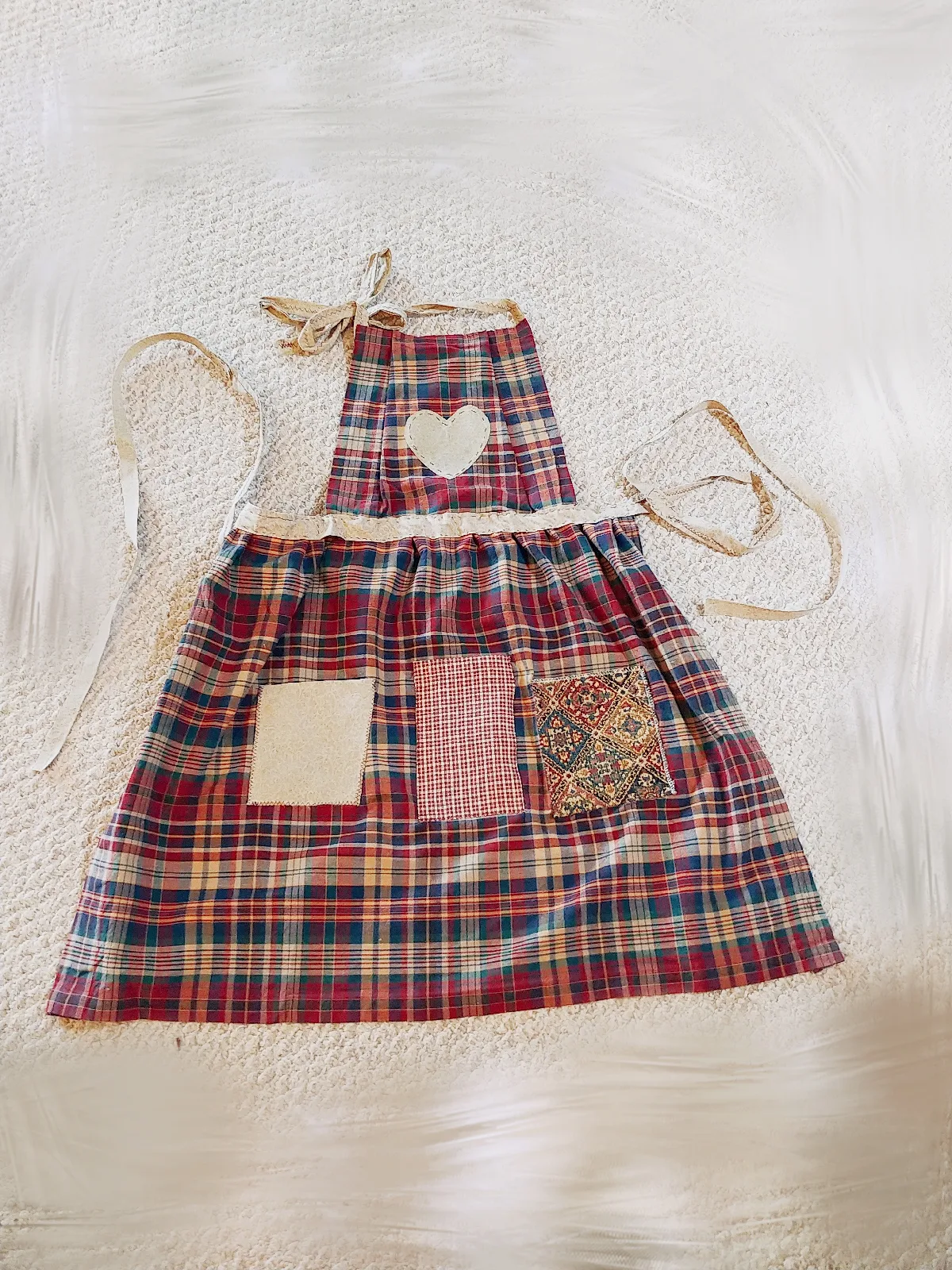
Cottagecore Aesthetic continued...
I recently bought this dress that I love, and plan to try it with this apron I recently sewed... Thought and opinions? 😁



"Patience Pole" theory and highline for horse training
I prefer an overhead tie, or what is known as a "highline" in the world of horse packing and camping. There is something else that has popped up frequently online lately, called a "patience pole", which serves the same purpose. I started using this with my young horses after I had one that would completely freak out and pull back when tied to the hitching post after having an accident. I think this is the safest way to tie if you can.


A little hard to see in this photo, but this is Pimms tied to an overhead branch at my grooming area. I also have a solar, motion-activated light for returns after dusk, and a gravel pad with a rubber mat where they stand.

* If horse throws a fit, elasticity of branch and rope bounces them back. I actually had one rear and slip, falling over, and the branch and rope was so elastic, he bounced back onto his feet!
* If the horse does freak out when tied with this, the safest thing to do is stand back and let them sort it out... don't go in to try to untie them and get yourself hurt. I have always had them calm down after a minute or so.
* make sure you use a swivel on the tie. I have noticed that antsy horses tend to turn in the same direction, which means they will gradually twist and tighten the rope without a swivel.
* As always, horses are dangerous and unpredictable, so use this method at your own risk.

Sports Tracker App for recording rides
UPDATE! As much as I loved the Sports-Tracker App, a friend introduced me to a new one which is actually geared toward horses, called Equilab. I actually use the free version, which is still chock-full of great features. For example, you can enter multiple horses, which is very handy for me. Also, if you have a riding lesson in the arena, or maybe forget to turn on the app when you start riding but really need to track the ride, you can manually enter a training.
There are additional features in the paid version, such as a "safety tracker" - where you can choose someone to get a real-time notification of your ride. So for example, if you are riding alone, a friend or spouse can monitor the ride to make sure you get back safely, and if something should happen, they can see on the map exactly where you are.
Here are some screenshots from my phone to show some of the features:
 |
Oct. 26, 2014
So I have a new favorite way to track my rides and horse workouts. It's an app for your smartphone called Sports-Tracker, and it uses your GPS to record a map of your route, your speed, your time, and numerous other functions. Yesterday I took Teddy out for a ride, and here's the "dashboard" of info:

I think what I like most is just the sense of accomplishment I get from looking back at what I've done!

I think what I like most is just the sense of accomplishment I get from looking back at what I've done!
Some Favorite Grooming Products for Dogs and Horses

First off, these Grooming Gloves...
I have tried numerous other types of scrubby mitts, bath mitts, and curry gloves, but these really have more teeth that actually get down to the skin. As proof, my sensitive TB is not a big fan. BUT, you can also use them on tails! Just put your palms together with the tail hair in between and stroke down. Works great!The next product, I actually purchased from my vet, but it is available on Amazon, and I intend to buy more. It is Hylyt Shampoo by Bayer
My long haired Shepherd, Zoey, has had a problem with flaky skin and sort of a greasy-feeling coat for quite a while. I have tried numerous shampoos and conditioners, to no avail. I mentioned it to the vet, thinking she might need some sort of heavy duty dip treatment. He quickly said, "Oh, that's no problem, we can give you a shampoo for that". I looked it up, and reviews said it was full of fatty acids and didn't contain detergent. So, figuring it would take a couple treatments, I gave her a bath with it.

Wow! One bath was all it took! No more flakes anywhere to be seen on her skin, and her coat was super soft. I really wish I had taken a before picture, as I was extremely impressed by the difference. I can't wait for the weather to warm up so I can try it on the horses.... particularly those prone to rain rot and fungus issues.
If you go through this stuff in large quantities due to having a kennel full of dogs or a stable full of horses, here is the gallon size for you.
Update: Works great on horses as well, and left their coats super soft and glossy. I also love the fact that this is safe for cats. One of our kitties was neglected as a kitten and never learned to properly groom herself. So she tends to get greasy and have lots of loose fur. A bath with this shampoo leaves her soft and clean for a long time. I am very impressed.
As
an Amazon Associate I earn from qualifying purchases.
Subscribe to:
Posts (Atom)
DIY / Homemade Horse Products - Updated!
These are my various home-made concoctions that I have found very useful to use around the farm. Please note that I may earn a commission fr...

-
 These are my various home-made concoctions that I have found very useful to use around the farm. Please note that I may earn a commission fr...
 -
 I prefer an overhead tie, or what is known as a "highline" in the world of horse packing and camping. There is something else tha...
 -
Here is my latest kitchen crafty venture... Making a thickening gel from various seeds and spices. I first came across the idea on a beauty...
